
This project studies the dynamic characteristics of bridges in Brunei for the purpose of structural condition monitoring and anticipating future maintenance. It combines a numerical model of the bridge, onsite vibration measurement, and a real-time remote monitoring system so that authorised engineers can check a bridge’s condition from anywhere. It was led from IADA in collaboration with Universiti Teknologi Brunei and the University of Warwick.
Aims and objectives
- Design and construction of a numerical model of the bridge, so researchers can learn its dynamic properties and analyse the numerical data produced.
- Data acquisition of the dynamic properties of a bridge: collecting onsite triaxial movement and vibration measurements, accounting for factors such as moving loads and sea waves, and using the data to develop the bridge’s dynamical model.
- Development of a real-time remote-access bridge health monitoring system: transmitting data from the local site to a remote server with local administrative access, analysing it to anticipate maintenance, and giving authorised users remote access to the bridge’s real-time condition.
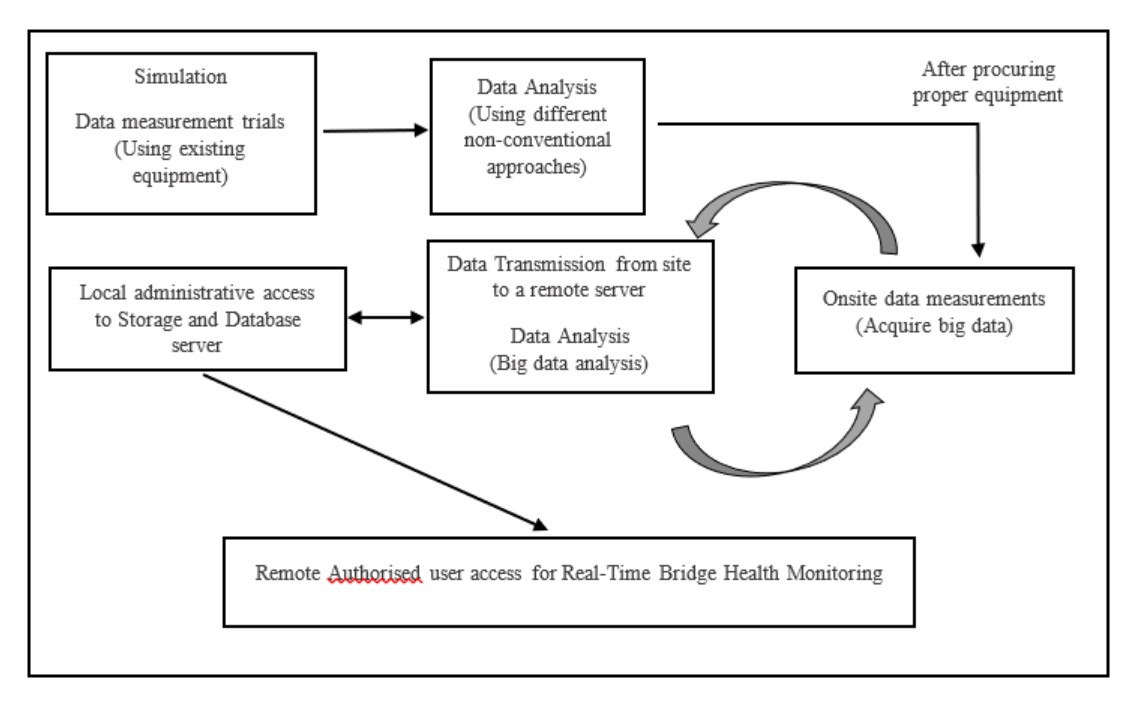
Onsite measurement requires several sensors to acquire good-quality data, so the collected data is large and its analysis is periodic to keep the response close to real time.
Sensing
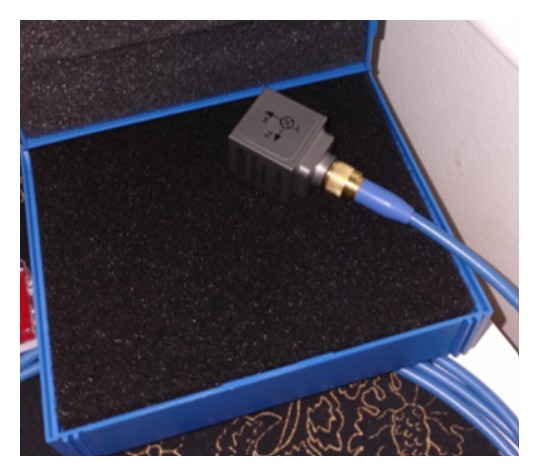
One of the candidate sensors is a Kistler low-frequency accelerometer, with a sensitivity of about 1984 to 2000 mV/g at 100 Hz and 0.5 g rms. The unit carries an acceleration calibration certificate (calibrated by Kistler, recertified by NIST) and meets ISO 9001:2015, ANSI/NCSL Z540-1-1994 (R2002), and ISO/IEC 17025:2017 accreditation through the ANSI-ASQ National Accreditation Board. Once the chosen sensor proves itself in measurement trials, more units are deployed to collect data across the structure.
Research team
- Dr Wahyu Caesarendra, Faculty of Integrated Technologies, UBD (Principal Investigator)
- Dr Juliana Zaini, Faculty of Integrated Technologies, UBD (Co-Principal Investigator)
- Dr Haji Awg Abdul Ghani Naim, Faculty of Science, UBD (Project Member)
- Pg Muhammad Nazri Bin Pg Hj Ahmad, lecturer at Universiti Teknologi Brunei (PhD student in Systems Engineering)
- Dr Dina Shona Laila, Senior Assistant Professor, Universiti Teknologi Brunei (external collaborator)
- Dr Irwanda Laory, Associate Professor, University of Warwick (external collaborator)
- Mr Rafitra Bin Hj Abdul Razak, Assistant Director, Department of Roads (external collaborator)
Publications
- Surindra, M. D., Caesarendra, W., Petra, M. I., Prasetyo, T., Putra, S. A., Zaini, J., Glowacz, A., and Naim, A. G. (2023). Vibration-Based Characterization of Underpass Bridge Using Wavelet Packet Decomposition Method. Journal of Engineering Science and Technology (JESTEC), 18(4), 2117-2131. Full text (PDF)
Project details
Started 1 July 2020, duration 24 months. A previous IADA research project.
Explore more on the Projects page.